Fruit and Porridge Combinations Babies Love

Fruit porridge for baby is one of the easiest ways to make breakfast tasty without a single grain of added sugar. Mashed or grated fruit adds natural sweetness, colour and fibre, and Pakistan's fruit seasons give you something new to try almost every month. Here are combinations babies tend to enjoy, with simple steps and safe textures by age.
Before you start: simple rules
- Start solids at around six months. Offer each new fruit on its own first, then mix it into porridge once you know it suits your baby.
- No sugar, honey, jaggery (gur) or juice for babies under 12 months. Ripe fruit is sweet enough.
- Cook hard fruits such as apple and pear until soft for younger babies.
- Mash fruit well for 6 to 8 months; from 8 to 9 months you can leave small soft lumps.
- Round fruits like grapes, jamun and cherries must be quartered lengthwise and deseeded for older babies, never served whole.
8 fruit and porridge combinations
1. Banana and rice porridge (from 6 months)
Mash 2 tablespoons of ripe banana (kela) into 3 to 4 tablespoons of warm, smooth rice porridge. Banana is available all year and gives a creamy texture.
2. Stewed apple and sooji (from 6 months)
Peel and chop one apple (saib), simmer in a little water for 8 to 10 minutes, then mash. Stir 1 to 2 tablespoons into thin sooji porridge. Sooji contains gluten, so introduce it on its own first.
3. Mango and oats (summer, from 6 months)
In mango (aam) season, blend a few spoons of ripe mango pulp and swirl it into soft-cooked oats. Use only the soft pulp near the centre and avoid the fibrous part near the guthli (stone).
4. Pear and barley porridge (from 6 months)
Steam pear (nashpati) until soft and mash into barley porridge. Barley contains gluten, so watch for any reaction the first few times.
5. Papaya and ragi (from 7 months)
Ripe papaya (papita) is soft and gentle on tummies. Mash 2 tablespoons into ragi porridge for a pretty orange-brown bowl.
6. Chikoo and rice (winter, from 7 months)
Scoop out ripe chikoo, remove the seeds and skin, mash and mix in. Chikoo is very sweet, so a little goes a long way.
7. Dates and oats (from 8 months)
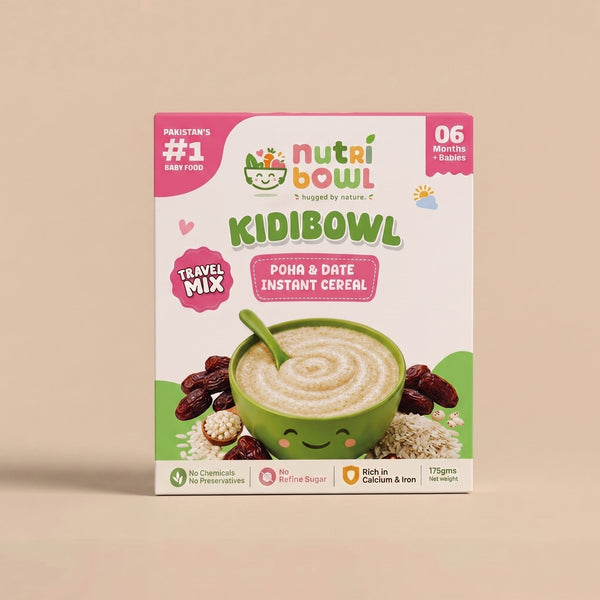
Soak 1 to 2 pitted dates (khajoor) in hot water for 15 minutes, blend into a smooth paste and stir into porridge. Dates are a natural sweetener; keep the amount small.
8. Guava and sooji (from 9 months)
Guava (amrood) is rich in vitamin C, which helps the body absorb iron from cereals. Cook peeled guava, then sieve out the hard seeds completely before mixing.
How much fruit to add by age
- 6 to 7 months: 1 to 2 tablespoons of smooth fruit puree in 3 to 4 tablespoons of porridge.
- 8 to 9 months: 2 to 3 tablespoons of mashed fruit with soft lumps in about half a katori of porridge.
- 10 to 12 months: mashed or finely chopped soft fruit stirred in, plus soft fruit pieces on the side to pick up.
Keep fruit as a part of the bowl, not the whole meal. Porridge, daal, egg, chicken and vegetables all have a place in your baby's day.
Hygiene tips for Pakistani kitchens
- Wash fruit well with clean water and peel where possible, especially in monsoon.
- Cut fruit just before serving; cut fruit left out in summer heat spoils quickly.
- Do not buy pre-cut fruit from street stalls for your baby.
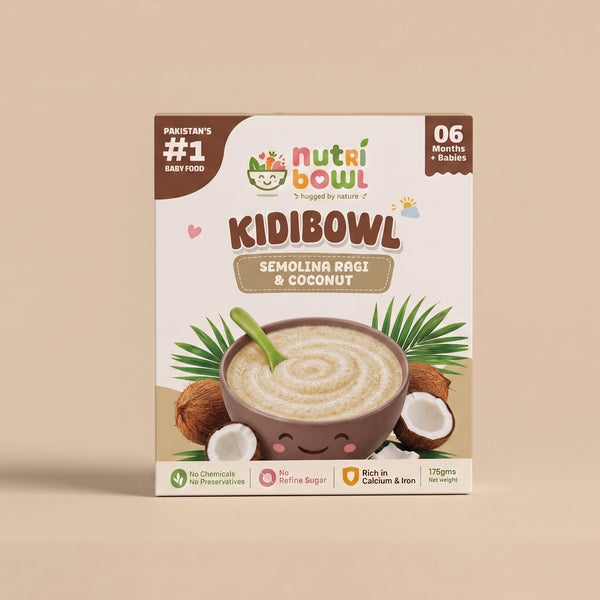
On busy mornings, you can use a ready porridge as your base. Nutri Bowl Rice porridge with nuts pairs well with mashed banana or stewed apple; it contains tree nuts, so introduce it on its own first and skip it if your baby has a nut allergy.
Frequently asked questions
Can I mix fruit and milk in porridge?
Yes. Porridge cooked with breast milk, formula or a little cow's milk in cooking is fine with fruit for most babies.
Which fruit is best to start with?
Banana, stewed apple and pear are gentle starting choices. Introduce one at a time.
Can I give citrus fruits like kinnow?
Small amounts of deseeded, membrane-free kinnow segments mashed into food are usually fine after six months, though some babies get a mild rash around the mouth.
For more ideas, read our guides to baby breakfast ideas and dates for babies.
This guide is general information, not medical advice. Please check with your paediatrician before starting new foods, especially if your baby has allergies, reflux or was born early.