Ragi for Babies: Benefits, Age and Easy Recipes

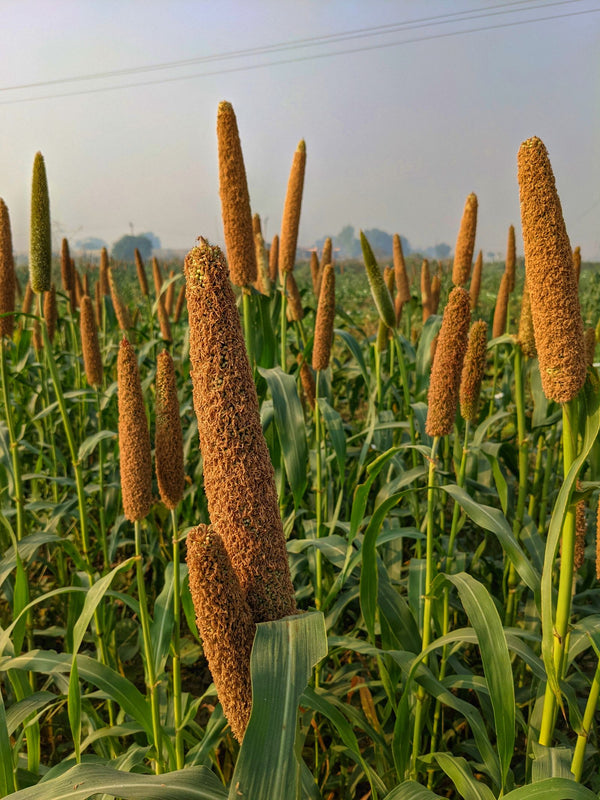
Ragi, also called finger millet or nachni, is a small reddish-brown grain that has fed families across South Asia for centuries. It is less common in Pakistani kitchens than rice or sooji, but more parents are now asking about it as a first food. This guide explains when babies can have ragi, what it offers, and three easy ways to serve it.
What is ragi?
Ragi is a millet. It is usually sold as a flour, either plain or made from sprouted grains. Cooked with water or milk, it turns into a smooth, slightly earthy porridge that most babies accept easily, especially when a little fruit is added for sweetness.
When can babies have ragi?
The World Health Organization recommends starting complementary foods at 6 months. Ragi porridge is a gentle option from that age, once your baby has tried one or two very simple foods such as rice porridge.
- Start small: 1 to 2 teaspoons of thin porridge, once a day.
- Wait 2 to 3 days before adding another new food, so you can spot any reaction.
- Cook it well: raw ragi flour must be cooked for several minutes until it thickens and loses its raw smell.
Plain ragi does not contain gluten. If you buy a mix, read the label: many ragi mixes, including our own, are blended with semolina (sooji), which does contain gluten.
What ragi offers a growing baby
- Calcium: ragi is known as one of the best plant sources of calcium among grains, which supports growing bones and teeth.
- Fibre: as a whole grain, it helps keep digestion regular once solids begin.
- Energy: it is filling, which makes it a good morning meal for active babies.
- Iron: ragi contains some iron. Pair it with a vitamin C food such as orange, guava or tomato in later meals to help your baby absorb more.
No single grain covers everything. From 6 months, WHO advises a varied diet that includes vegetables, fruit, pulses and animal-source foods such as egg, chicken or fish.
3 easy ragi recipes for babies
1. Basic ragi porridge (6 months and up)
- Mix 1 tablespoon ragi flour into 120 ml cold water until there are no lumps.
- Cook on low heat for 5 to 7 minutes, stirring all the time, until smooth and thick.
- Cool to lukewarm. Add a little breast milk or formula after cooking if you want a creamier texture.
2. Ragi and banana porridge (7 months and up)
Make the basic porridge, then stir in 2 tablespoons of well-mashed ripe banana. The banana adds natural sweetness, so there is no need for sugar.
3. Ragi and dates porridge (8 months and up)
Soak 1 soft date in warm water for 10 minutes, remove the seed and mash it into a smooth paste. Stir it into cooked ragi porridge. Dates are naturally sweet, so a small amount is enough.
The five-minute option: Semolina Ragi
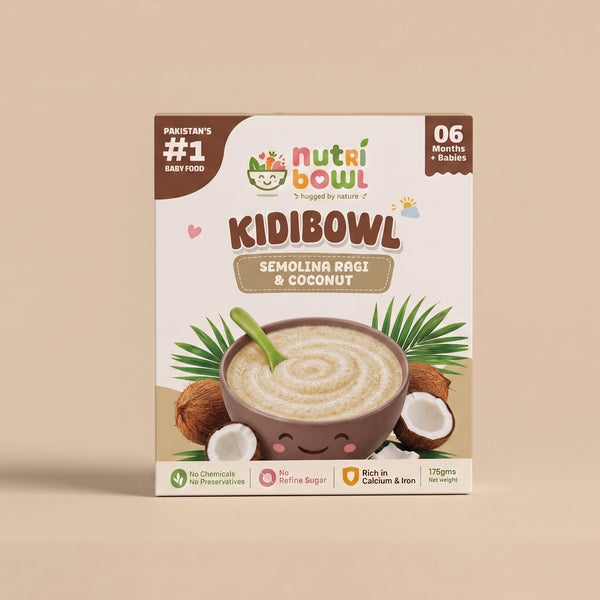
On busy mornings, Nutri Bowl Semolina Ragi gives you a ready porridge of semolina, ragi and coconut, with no preservatives.
- Take 3 tablespoons (30 grams) of the mix in a bowl.
- Add 100 ml of piping hot milk or water and stir until smooth.
- Cover and let it rest for 5 minutes, then cool to lukewarm.
Because it contains semolina (gluten) and coconut, offer it once your baby has tried sooji and coconut on their own. For a younger baby, add a little extra liquid and serve a smaller portion.
How to serve ragi as your baby grows
- 6 to 8 months: thin, smooth porridge.
- 8 to 10 months: thicker porridge mixed with mashed fruit or vegetables.
- 12 months and up: soft ragi pancakes, ragi upma, or ragi added to roti dough.
Common questions
Can I give ragi every day?
Yes, as one part of a varied diet. Rotate it with other grains such as rice, oats, barley and sooji.
Can ragi cause constipation?
Any new solid food can change your baby's stools. Make sure ragi porridge is not too thick, offer small sips of water with meals after 6 months, and include fruit and vegetables. If constipation lasts several days or your baby seems in pain, see your doctor.
Is sprouted ragi better?
Sprouted ragi flour is popular because sprouting can make grains easier to digest. Both sprouted and regular ragi are fine for babies, as long as the porridge is cooked thoroughly.
New to solids? Start with our 6 Month Baby Food Chart for Pakistani Parents, or read about another traditional grain in Talbina for Babies.
This article is general information, not medical advice. Check with your paediatrician before introducing new foods, especially if your baby has allergies, eczema or a medical condition.
Try it this week: order Semolina Ragi, or mix it with two other flavours in the Pack of 3. Cash on delivery across Pakistan.