Rice Cereal for Babies: Homemade vs Ready-Made

Rice cereal for babies is one of the most familiar first foods in Pakistani homes, often simply called chawal ki kheer without sugar or "rice ka daliya". It is mild, easy to digest and simple to make, but plain rice on its own is low in iron and protein. Whether you make it at home or use a ready-made cereal, a few small additions make it a much better meal.
How to make rice cereal at home
- Wash 1 cup of white or brown rice and dry it completely on a clean cloth.
- Dry roast it on low heat for 5 to 7 minutes until it smells nutty, then cool.
- Grind to a fine powder and store in a clean, dry, airtight jar for up to 2 to 3 weeks.
- To cook: mix 1 tablespoon of powder with about half a cup of water, stirring to avoid lumps.
- Cook on low heat for 5 to 8 minutes until soft and smooth, stirring often.
- Cool to lukewarm and thin with breast milk or formula if needed.
How much to give by age
- Around 6 months: start with 1 to 2 teaspoons once a day, smooth and runny. Increase slowly to 2 to 3 tablespoons.
- 7 to 8 months: 3 to 4 tablespoons, thicker, 2 meals a day along with other foods.
- 9 to 12 months: half a small katori or more, with soft lumps, as one of 3 meals.
Breastfeeding remains the main food through the first year, and is recommended to continue to two years or beyond.
Making rice cereal more nourishing
Rice is a good base, but babies from 6 months need iron, protein and variety. Mix in, one new food at a time:
- Well-cooked, mashed moong or masoor daal for protein and iron.
- Mashed boiled egg yolk, then whole egg, once your baby has tried egg safely.
- Finely minced, well-cooked chicken or fish without bones.
- Pureed pumpkin (kaddu), carrot (gajar), spinach (palak) or sweet potato (shakarkandi).
- Mashed banana or stewed apple for natural sweetness, instead of sugar.
Do not add salt, sugar or honey before 12 months. Rotate rice with other grains such as oats, barley, sooji and ragi so that rice is not the only cereal your baby eats. Variety also helps your baby get used to different tastes and textures early, which can make family meals easier later.
Homemade vs ready-made: an honest look
- Homemade is cheap and you control every ingredient. It takes time to roast and grind, and needs careful dry storage in humid months.
- Ready-made saves time on busy mornings, during travel or load-shedding. Read the label for added sugar, salt, flavours and allergens, and check the expiry date.
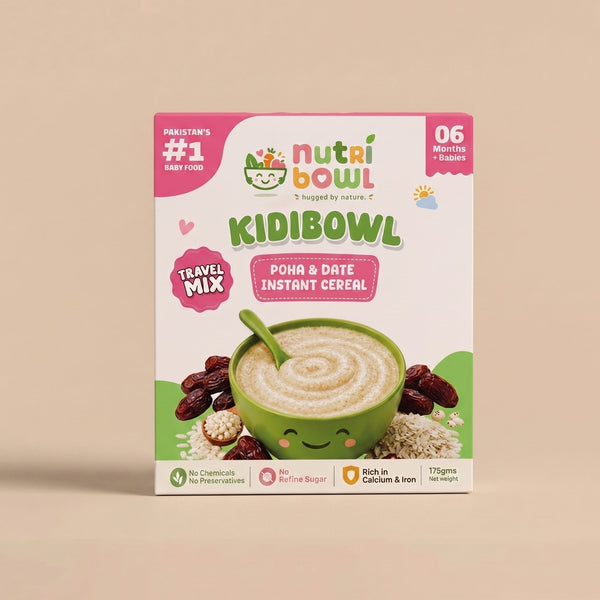
Many parents use both: homemade at weekends, ready-made on rushed days. If you want a ready option, the Nutri Bowl Rice Porridge with Nuts is a rice base with nuts, mixed with hot water. It contains nuts, so introduce it only after your baby has tried nuts in a safe, ground form without a reaction.
Frequently asked questions
Is rice cereal a good first food?
It is a gentle option, but not the only one. From around 6 months, iron-rich foods such as daal, egg and meat should come in early alongside cereals.
Can rice cereal cause constipation?
Some babies get firmer stools when rice is a big part of the diet. Offer water with meals and add fruits and vegetables such as pear, prunes or papaya. See a doctor if your baby is in pain or there is blood in the stool.
Can I put rice cereal in the bottle?
No. Cereal in a bottle can lead to choking and overfeeding. Always give it with a spoon, with your baby sitting upright.
Read more in Rice and Nut Porridge: A Gentle First Food and Homemade vs Packaged Baby Food: An Honest Comparison.
This guide is general information, not medical advice. Please check with your paediatrician before starting new foods, especially if your baby has allergies, reflux or was born early.