Poha for Babies: Light, Quick and Easy to Digest

Poha (flattened rice, also called chiwra or beaten rice) is quick, light and cooks in minutes. Poha for babies is a handy option once your baby has started solids at around 6 months, because it softens easily into a porridge and later into a soft upma-style meal that older babies can eat with their fingers.
What is poha and why it suits babies
Poha is rice that has been soaked, flattened and dried. Because it is already partly processed, it softens quickly with water and is usually gentle on little tummies.
- Quick: ready in 5 to 10 minutes, useful on busy mornings or during load-shedding.
- Naturally gluten-free: it is rice, so it suits babies who have not yet started wheat or barley.
- Versatile: works as a smooth porridge, a lumpy mash or a soft finger food.
Poha is mainly an energy food. Pair it with daal, egg, vegetables or meat during the day to cover protein and iron.
When to start and how much
- 6 months: poha powder porridge, thin and smooth. Start with 1 to 2 teaspoons.
- 7 to 8 months: thicker porridge, 3 to 5 tablespoons, with mashed fruit or vegetables.
- 9 to 12 months: soft poha upma with tiny vegetable pieces, about half a small katori.
- Toddlers: family-style poha with mild spices and a little salt after 12 months.
Recipe 1: Poha porridge (from 6 months)
- Dry roast half a cup of thick poha on low heat for 3 to 4 minutes until crisp. Cool and grind into a fine powder. Store in an airtight jar.
- Mix 1 tablespoon of poha powder with a little cold water to make a smooth paste.
- Add 100 to 120 ml water and cook on low heat, stirring, for 4 to 5 minutes until thick and smooth.
- Cool to just warm. Add mashed banana, stewed apple or soaked date paste for natural sweetness. No sugar, salt or honey under 12 months.
Recipe 2: Soft vegetable poha (from 9 months)
- Rinse 2 tablespoons of thick poha in a sieve and let it soften for 2 to 3 minutes.
- Heat a few drops of ghee, add a pinch of zeera and a pinch of haldi, then add 2 tablespoons of finely grated carrot and a few peas. Cook until very soft with a splash of water.
- Add the poha and 2 to 3 tablespoons of water, cover and cook for 2 minutes until soft.
- Mash lightly. Mash the peas well for younger babies. Skip peanuts, curry leaves and green chilli for babies.
Safety and storage tips
- Choose thick poha: it holds up better and does not go mushy too quickly.
- Clean well: pick out any husk or stones and rinse before cooking.
- No raw poha: dry poha flakes can be a choking hazard for babies. Always cook or soak until soft.
- Peanuts: traditional poha often includes whole roasted peanuts. These are a choking hazard for under-5s; use finely ground peanut powder only after peanut has been introduced.
- Storage: keep poha and poha powder airtight, away from humidity, and use within a few weeks.
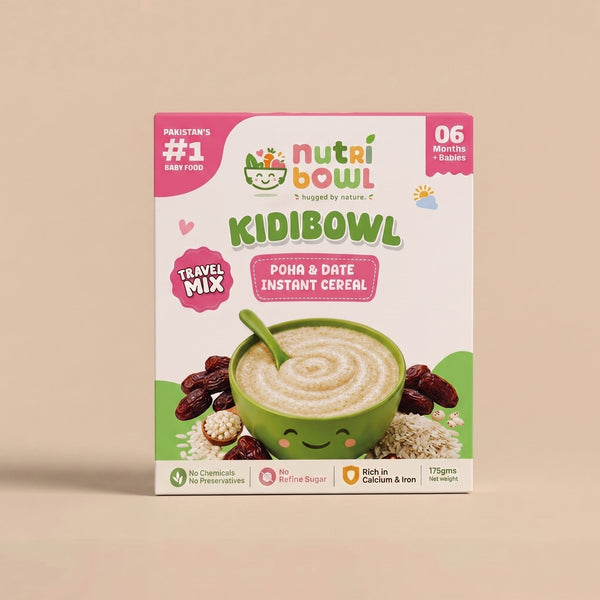
For travel days, our Travel Mix: Poha and Dates combines poha with dates for natural sweetness. Check the label for allergens before giving it for the first time.
Frequently asked questions
Is poha better than rice for babies?
Poha is rice in a different form. It cooks faster and softens easily, but nutritionally it is similar. Use both and rotate with other grains.
Can poha cause constipation?
Any low-fibre food eaten often can contribute. Add vegetables and fruit, offer water with meals, and rotate with fibre-rich grains like barley and ragi.
Can I give poha every day?
You can offer it often, but a varied diet with different grains, daal, eggs, meat, vegetables and fruit is best.
Related reads: Makhana for Babies: Is It Safe and When to Give It? and Travelling with a Baby: Food Packing Checklist.
This guide is general information, not medical advice. Please check with your paediatrician before starting new foods, especially if your baby has allergies, reflux or was born early.